Based in Whangārei


About Us
Your Child is in Great Hands
The Village
Philosophy
At the heart of our home-based early childhood education philosophy is the belief that children thrive when they are supported by meaningful relationships, immersed in nature, and engaged in purposeful play. These three principles guide every aspect of our approach, shaping the learning environment and the experiences we create for young children.
We are guided by Te Whākriki (2017) and weave this document through our practice, documentation and work with educators, tamariki and whānau.
1. Valuing Relationships:
We believe that strong, supportive relationships form the foundation of a child's learning journey. In a home-based setting, children experience the warmth and stability of close-knit bonds with caregivers, family members, and peers. These relationships foster trust, security, and a sense of belonging, which are essential for emotional and social development.
By nurturing respectful, compassionate interactions, we empower tamariki to develop positive self-esteem, effective communication skills and the ability to navigate the world around them with confidence.
We see caregivers as co-learners, partners in discovery, and role models who help guide children in forming connections and understanding themselves and others. We recognise that it takes a village to raise a child and responsive, reciprocal relationships between all who connect with the tamariki are nurtured and valued.


2. Embracing Nature:
We recognise that nature is an endless source of inspiration, curiosity, and learning. Our philosophy emphasises the importance of engaging tamariki with Te Taiao through outdoor exploration, hands-on experiences, and a deep respect for the environment.
Nature is not merely a backdrop for play; it is an integral part of tamariki growth and development. Whether through tending to a garden, observing wildlife, or exploring textures, sounds, and sights in the natural world, tamariki develop critical thinking, creativity, and a sense of responsibility toward the earth.
We believe that by fostering a deep connection to nature, we support for tamariki a lifelong appreciation for sustainability, interdependence, and environmental stewardship - avenues to practice and refine principles of kaitiakitanga.
3. The Power of Play:
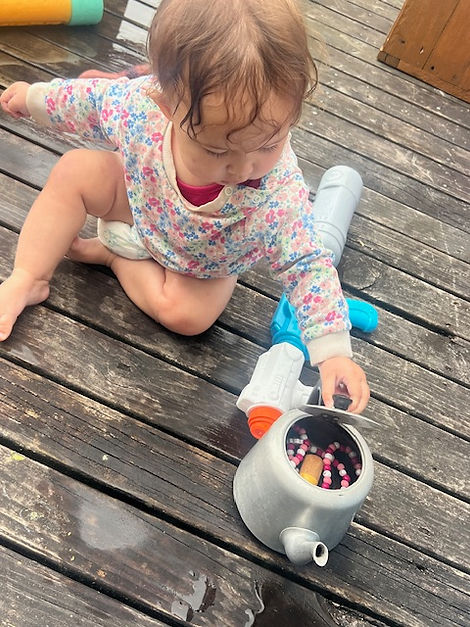
Play is the most natural and effective way for tamariki to learn and grow understanding and theories.
Through play, tamariki explore ideas, solve problems, and experiment with the world around them. It is through play that they make sense of their experiences, practice social skills, and develop cognitive abilities.
In our home-based early childhood education environments, play is at the centre of everything we do. We provide rich, open-ended opportunities for both structured and unstructured play that encourages creativity, critical thinking, and collaboration. Whether it's building with blocks, pretending in role play, or investigating new materials, every experience is valued as an important step in the tamaiti learning process.
We believe that when tamariki are given the freedom to play, they not only learn about the world but also develop the confidence to explore and shape it on their own terms.